Case 1: Designing a Two-Sided Healthcare Marketplace
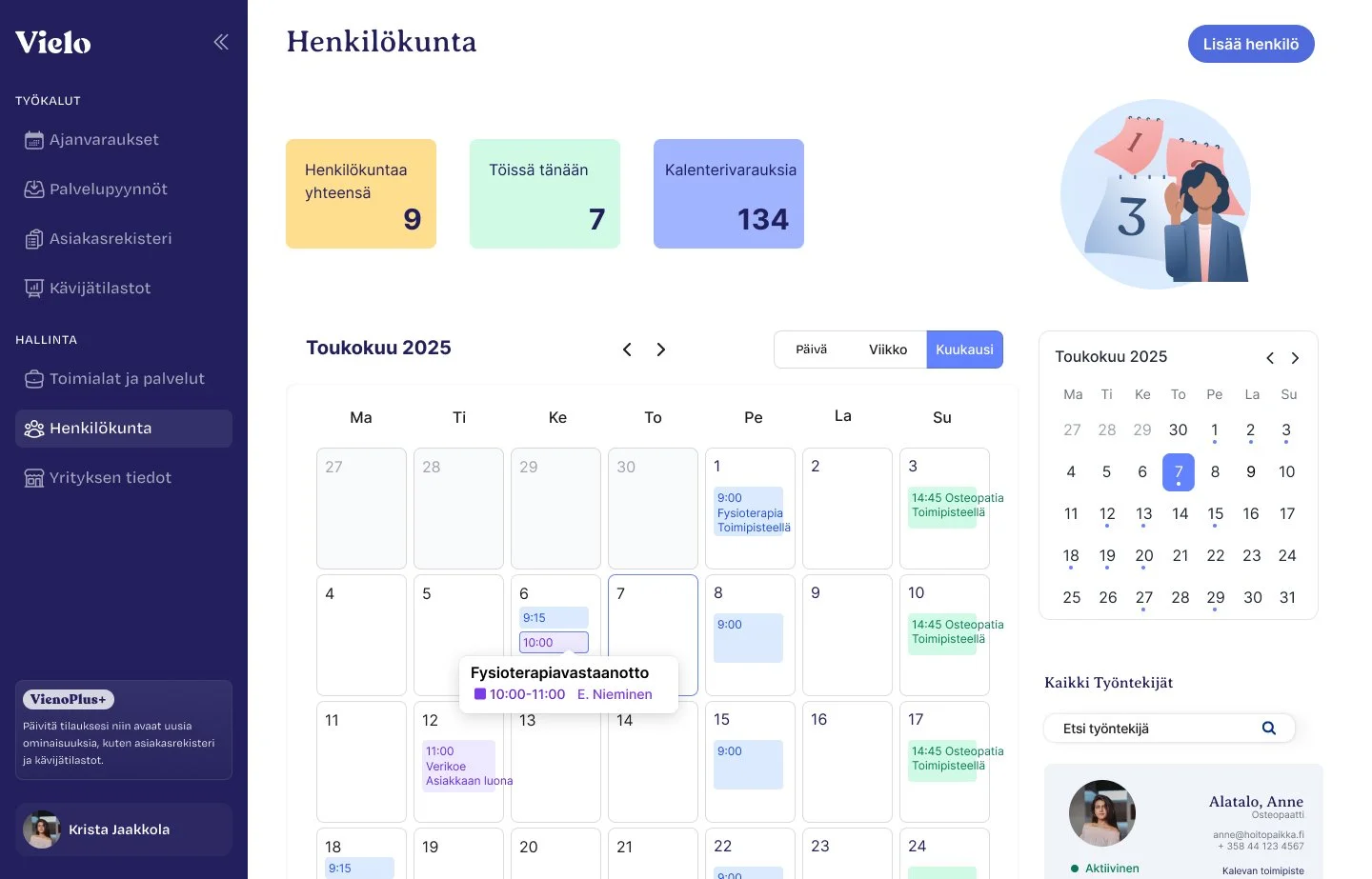
Overview
Designing a digital marketplace for healthcare and wellbeing professionals presented a unique challenge: creating a product that serves two fundamentally different user groups while maintaining a coherent and intuitive experience.
As the sole Product Designer in a multidisciplinary startup team, I translated high-level product goals into a structured product experience by defining user journeys, interaction patterns and the overall UI direction. My work focused primarily on the service provider platform, while also contributing to selected public-facing features. While consumers searched for suitable healthcare professionals and services, providers managed appointments, employees, availability and incoming service requests through their own portal. My role was to ensure these connected experiences supported both business goals and user needs while establishing a scalable foundation for future growth.
Rather than designing isolated screens, my role was to establish a scalable product foundation that aligned user needs, business goals and technical implementation. This provided the team with a clear design direction while allowing room for collaborative refinement throughout development.
The Challenge
The platform was designed for two distinct audiences.
Healthcare professionals needed efficient tools for managing their services, availability and customer interactions. At the same time, end users needed a simple and trustworthy way to discover, compare and book services.
Balancing these two perspectives required more than creating attractive interfaces. The product needed clear information architecture, logical user flows and interaction patterns that could scale as the platform evolved.
My Role
As the sole Product Designer, I led the design process and was responsible for defining the overall product experience and ensuring consistency across the platform.
My responsibilities included:
Product design
UX strategy
Interaction design
UI design
Design documentation and developer handoff
Designed both provider and customer experiences
Defined user journeys across the marketplace
Created provider management interfaces
Collaborated closely with developers and founders
The visual identity had already been partially established before I joined the project, allowing me to focus primarily on product structure, usability and interaction design.
Design Approach
The project started from broad product goals rather than detailed specifications. This meant transforming abstract ideas into concrete user experiences while continuously validating decisions with the team.
I designed the provider experience around real workflows, ensuring that managing services, availability and customer interactions remained efficient without overwhelming users with unnecessary complexity.
Instead of treating design as a handoff, we worked iteratively throughout development. I established the overall UX and UI direction, interaction principles and design framework, while experienced developers contributed valuable technical insights and implementation details. This collaborative way of working helped us refine solutions quickly without compromising the overall product vision.
Collaboration
One of the most rewarding aspects of the project was the team's collaborative culture.
Everyone felt comfortable sharing ideas, challenging assumptions and building on each other's thinking. While I owned the design direction, the openness of the team made the product stronger. Developers regularly contributed implementation ideas, and discussions often led to solutions that neither design nor engineering would likely have reached independently.
The project reinforced my belief that strong products are built through shared ownership, open communication and mutual trust—not isolated disciplines working in silos.
Outcome
The project resulted in a structured, scalable foundation for a two-sided healthcare marketplace that supported both service providers and end users.
Beyond the product itself, the experience strengthened my ability to translate strategy into tangible product experiences, collaborate closely with engineering teams and design for complex systems where user needs, business objectives and technical constraints all need to be balanced simultaneously.